
Discover the Magic of Corsica!

Today, we are taking you on a sunny voyage of discovery to one of Europe's most fascinating, yet best-kept wine secrets: Corsica! Be honest: what comes to mind when you think of Corsican wines? Chances are, a little question mark appears above your head. "Unknown", "probably not available anywhere", or "typically Mediterranean: boiling hot, heavy on the alcohol, and lifeless due to low acidity"? Think again!

In fact, Corsica is a rebellious treasure trove full of fresh, crisp, and utterly unique wines. Go ahead and pop that cork, because this island is guaranteed to turn your taste buds upside down!
The Terroir: A mountain in the sea
Corsica is the fourth-largest island in the Mediterranean Sea. It is located 170 kilometers from the French mainland and just 90 kilometers from Italy. But what makes it truly special? It is literally "a mountain in the sea".
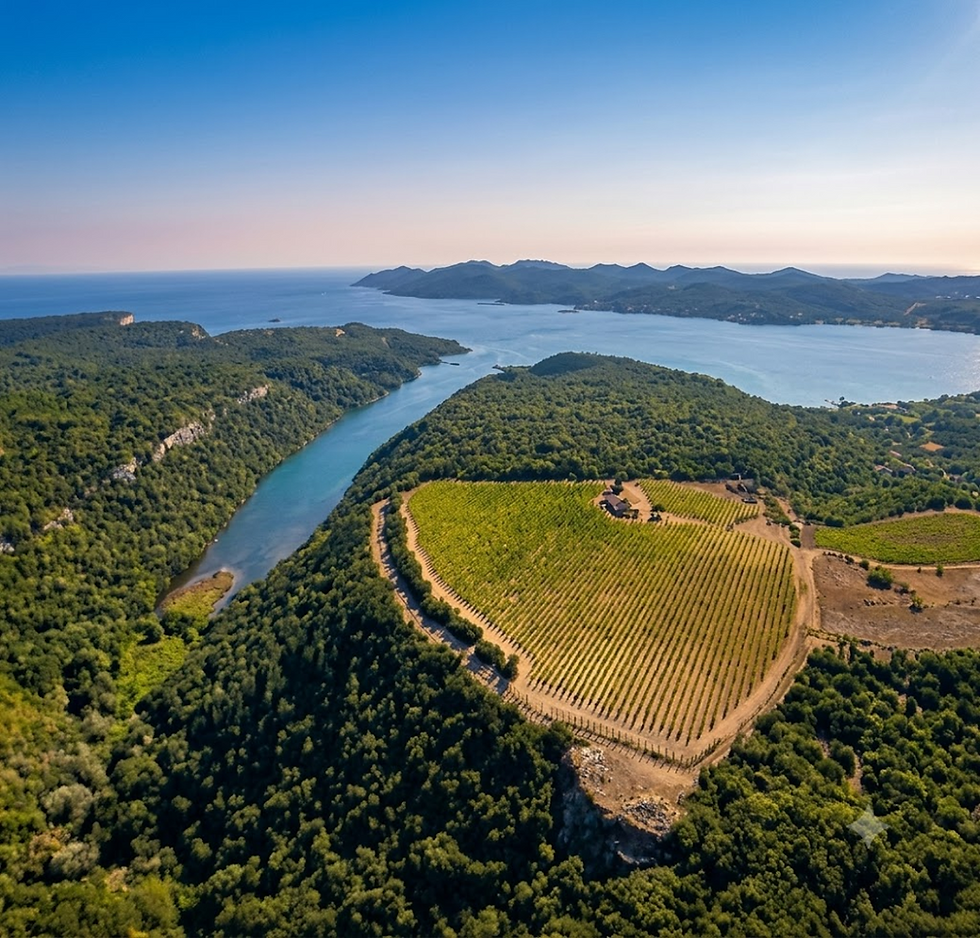
Rugged mountain peaks rising up to 2,000 meters high soar straight out of the waves. This creates a spectacular natural theater and an incredible wine climate:
Sun & Wind as natural air conditioning: With a whopping 3,500 hours of sunshine a year, the grapes get beautifully sun-baked. Fortunately, five major wind currents constantly sweep across the island. They blow the vineyards dry and keep everything wonderfully fresh!
A patchwork of soils: You won't find this much variety anywhere else. Two-thirds of the west (Ancient Corsica) consists of granite. The east (Alpine Corsica) is packed with slate and schist. In the northwest and south, you'll find pure limestone soils. And the east coast? That is dotted with alluvial clay and pebbles!
Corsica and numbers
6,000 hectares of lush vineyards.
9 AOPs (including the absolute top-tier crus, Ajaccio and Patrimonio) and 1 IGP.
Showing its true colors: Surprise! A whopping 68% of the production is rosé! Red and white brotherly share the rest, coming in at 16% each.
Rare stuff: The Corsicans quite enjoy a glass themselves; 35% is consumed right on the island, and 45% goes to mainland France. Only 20% is destined for export. Exclusivity guaranteed!

Some history
Wine has been in the blood of Corsicans for millennia:
500 BC – 550 AD: The Phoenicians introduce viticulture to the island, which is later further developed by the Greeks and Romans.
12th – 17th Century: Under Genoese rule, many new and unique grape varieties are developed.
18th Century – Present: Corsica becomes French. Following setbacks such as the Phylloxera plague and the World Wars, as well as a period of mass production in the 1960s, a major quality restructuring took place between 1980 and 2000. Today, the focus is entirely on unique, local grape varieties.
The local heroes: Authentic Grapes
Forget Chardonnay or Merlot; on Corsica, the indigenous grape varieties rule the roost! These are the flavors you won't experience like this anywhere else:

Overview of the Unique Corsican Grape Varieties
Grape Variety | Type | Characteristics & Flavor Profile | Key Facts / Particularities |
Vermentinu | White | Highly aromatic, notes of citrus, almond, and white flowers. | The "King" of white grapes; great aging potential. Mandatory 100% in white AOP Patrimonio. |
Bianco Gentile | White | Full and powerful on the palate; aromas of pear, citron (cédrat), candied lemon, and honey. | Characterized as a truly "unique" grape variety on the island. |
Genovese | White | Old and historical grape variety. | Originally from Genoa, grown just off the coast of Cap Corse. |
Grape Variety | Type | Characteristics & Flavor Profile | Key Facts / Particularities |
Niellucciu | Red | Powerful and tannic with notes of dark red fruit, spices, 'maquis' (shrubland), and leather. | "The King of Patrimonio" and genetically identical to Sangiovese. The key variety for red AOP Patrimonio (90% mandatory) with great aging potential. |
Sciaccarellu | Red | Elegant and lighter in color, with aromas of red berries, raspberry, and pepper. | "The Crunchy One." A typically native, supple variety with a characteristically firm, crunchy skin. Widely planted in the south and highly important for the refined taste of Corsican rosé. |
Carcajolo Nero (Carraghajolu) | Red | Deep red and highly aromatic with notes of dark forest fruit, pepper, and a fine, lively freshness. | An old, authentic island variety that has been revived by quality winemakers. |
Minustello (Minustellu) | Red | Intense, dark color with aromas of plum and licorice. | Known elsewhere as Graciano. Brings extra body, structure, and color to blends. |
Zoom into the Top-Crus: Patrimonio & Ajaccio
AOP Patrimonio: Chalk & character

In the northwest lies Patrimonio, a legendary AOP since 1968. Thanks to its limestone-rich soil and a milder microclimate, monumental wines are born here. White wines here are required to be 100% Vermentinu, and reds must consist of at least 90% Niellucciu. This is where you will find iconic vignerons like Arena, Leccia, and Gentile!
AOP Ajaccio: Granit & Elegance

In the southwest, you'll find Ajaccio, where the vineyards rest on pure granite. Here, Sciaccarellu reigns supreme (minimum 60% for reds). The result? Not heavy, sluggish wines, but pure liquid elegance with incredible finesse! Big names here include Abbatucci and Vaccelli.
Taste the Clos Ventur
At Passie voor Wijn Breda, we have brought the absolute showstoppers from the leading biodynamic estate, Clos Venturi, straight to Brabant. These wines are crafted at an altitude of 400 meters, using purely natural, indigenous yeasts:
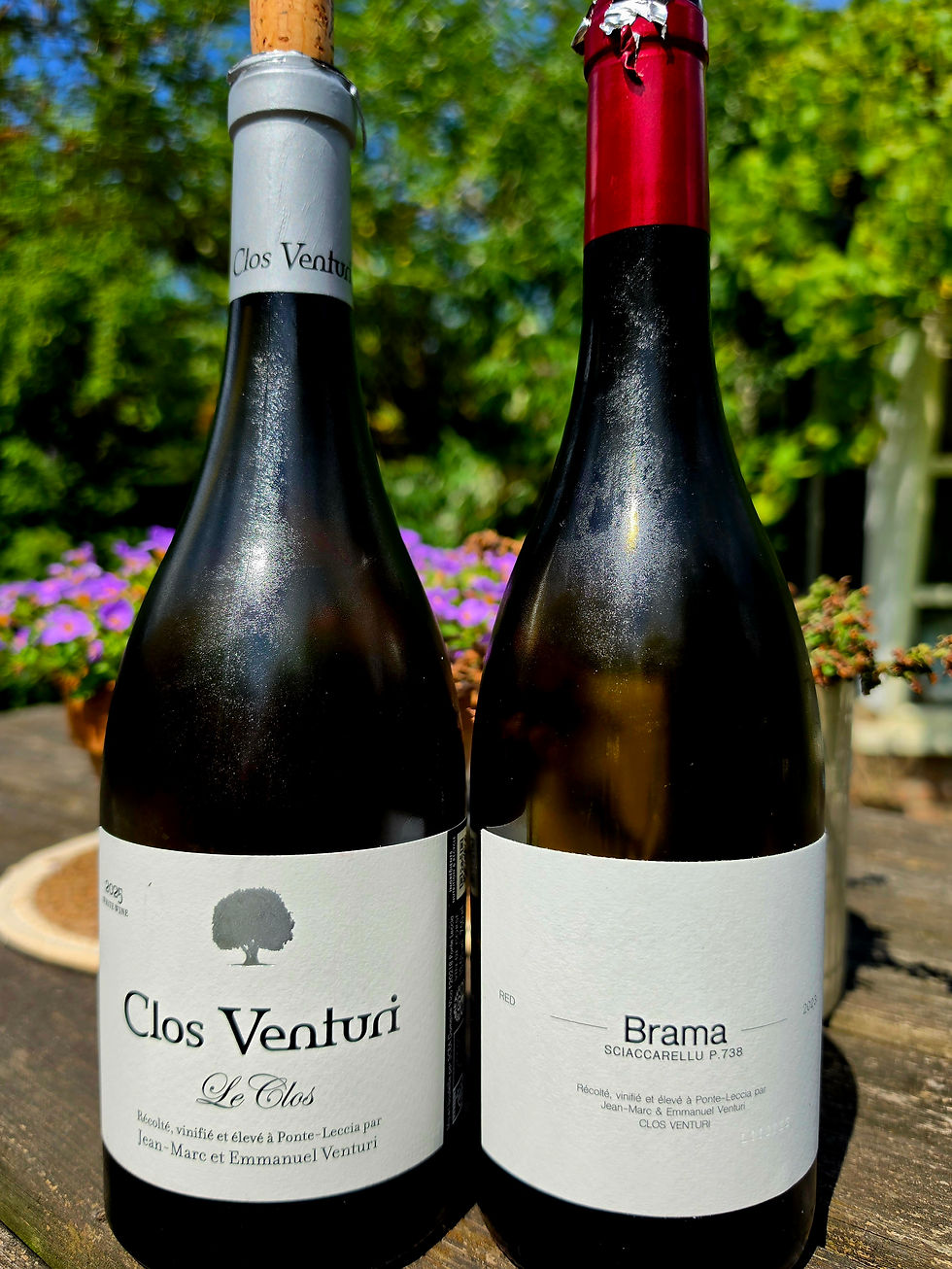
🥂 Clos Venturi Corse Le Clos Blanc 2025 — €34,95
Grape: 100% Vermentinu (pure liquid expression!)
Taste: Gold in the glass. A perfect balance between crisp freshness and ripe, southern richness, with that characteristic hint of almond in the finish.
Food Pairing: Amazing with pasta alla vongole, fresh goat cheese, or grilled chicken with lemon and thyme.
🍷 Clos Venturi Corse Brama Rouge Sciaccarellu 2024 — €29,95
Grape: 100% Sciaccarellu
Taste: Forget heavy alcohol bombs. This is a super refined, light-footed red wine packed with red fruit and floral notes. It also tastes fantastic slightly chilled on a lazy summer evening!
Food Pairing: Carpaccio, steak tartare, or—surprisingly—a hearty piece of grilled fish.
Dit artikel is geschreven door Register Vinoloog en Register Wijndocent Jacqueline de Gouw, die een authoriteit is op gebied van wijn, met hulp van a.i.


Comments